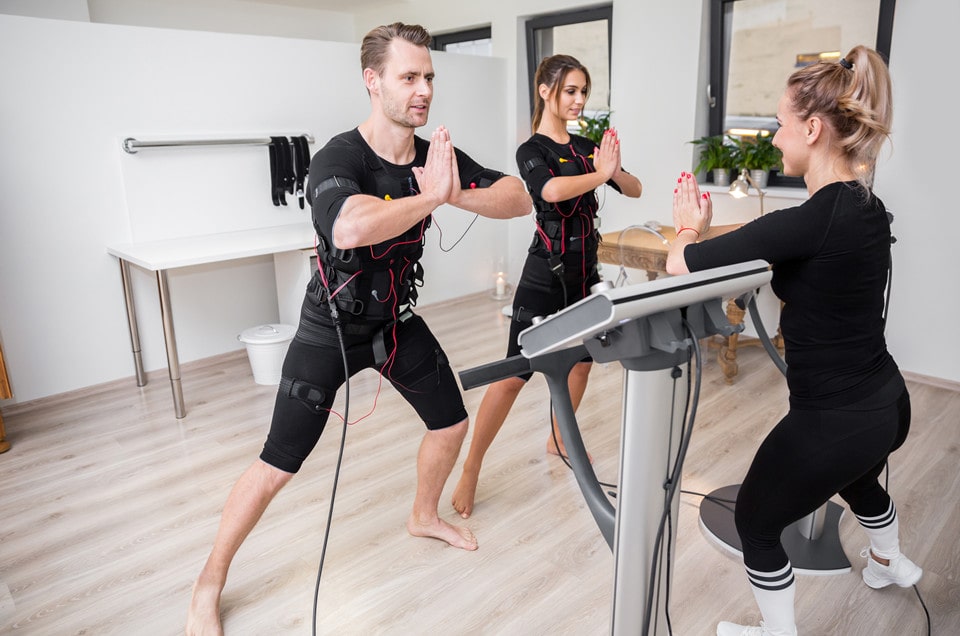
Many people have become utterly busy with work and other responsibilities, and injecting a complete workout routine has become nearly impossible. But as technology continues to dominate people’s daily lives, innovations such as EMS have become inevitable.
EMS training is changing the world of fitness and weight loss.
It is now the trend. And a lot of people are opting for EMS training. It is said that a 20-minute EMS training session with ems body suit is equivalent to 4 to 5 hours of high-intensity workout sessions.
That means you don’t need to spend your precious hours at the gym on a daily basis and get more time for other work. To be practical, most of us can not afford to spend hours in the gym, and as a result, we skip the fitness part. Experts recommend using EMS for at least one or two sessions per week only. And with this brief period, you can reap numerous benefits.
But now, with EMS training, you will be able to take care of yourself and get the physique you longed to have. You just need to hop into the Aventura EMS gym near you. But before getting a complete understanding of this new trending EMS training.
What Is EMS Training?
Electric myostimulation or Electric Muscle Stimulation is a highly effective training form. This particular training utilizes both low and mid-frequency electric currents in order to increase the natural muscle contraction of the body significantly.
It eventually results in more muscle fiber activation in comparison to all those conventional training methods.
This particular form of training is a whole-body workout that promotes weight loss along with stimulating muscle growth, increasing physical strength, and relieving muscular imbalances and tensions.
In case you are looking for a personal training form, you can definitely opt for this training session and adopt numerous individual training goals; for example, EMS training can reduce back pain significantly.
There are also some instances where EMS clients have reported complete alleviation of their Chronic back problems. EMS increases both muscle tone and blood flow to all the neighboring tissues; this specific exercise form might also have a beneficial impact on different types of cellulite problems.
In addition, a spine specialist uses EMS training in conjunction with other rehabilitative therapy methods in patients with spinal injuries or conditions. Even chiropractors, physical therapists, and orthopedic doctors incorporate them into a patient’s treatment plan.
EMS Training: How Does It Work?
This training form utilizes the nervous system of our bodies and activates the muscle tissues through electric currents. EMS training provides low or mid-frequency impulses, which are completely harmless if they are applied in the proper way.
Small electrodes are attached to the skin during a session over specific muscle groups. The electrodes send electrical impulses with the strength and intensity adjusted through the knobs on the device. The impulses will make you feel like your muscles are shaking and tightening. For some people, this can be uncomfortable and, at times, intense, but it shouldn’t be painful. The feeling is similar to pins and needles.
EMS training works on bringing the muscle to a state of complete contraction. Here, the key difference to all those conventional training methods is that in EMS training, the electric stimulation lets more muscle fibers be activated during the training session.
That means more of the muscles are put to work. The best part is that the intensity of this particular effect can be controlled through the regulation of the provided electric current itself.
When an individual opts for whole body EMS Training, the training recruits all the large muscle groups of the body along with activating even deeper lying tissues, these are usually challenging to reach with all those traditional training methods.
It is really effective for beginners especially. This highly effective training is around 20 times more intense compared to conventional strength training methods, like high-intensity weight training. This is why it is said that 20 minutes of EMS training is equivalent to 4 to 5 hours of conventional training.
A whole-body workout method through EMS training is a new and innovative method of training. You might be surprised to know that, for decades, localized electric muscle stimulation has been used in physical therapy in order to treat different types of chronic ailments, along with bringing relief to several patients.
Is EMS Training Safe?
As EMS training involves electric currents, a lot of people are concerned about safety. But the electric current that an individual will be exposed to during EMS training is completely harmless. EMS uses the neural mechanism, which is the same as your body’s own.
Like a typical high-intensity workout, you may experience delayed onset muscle soreness (DOMS), so being aware is essential. Muscle soreness may be relieved through heat therapy and OTC pain medications.
Here, the only difference is that the electric signal, which results in the musical contraction, is applied externally. Still, there are some specific contraindications which are required to be taken into consideration. That means, as long as you are going to a certified EMS trainer, you are totally safe.
Incorrect placement of electrodes usually causes unnecessary pain, burns, and skin irritations. That’s why only a trained individual must carry out the process.
Read Also
- Where to Find Reliable Mental Health Support for Teens
 Have you noticed changes in your teen’s mood, sleep, or behavior that leave you worried? Growing up can bring stress from school, friends, family, and new demands. Some teens may struggle to share their feelings or ask for help, even when they need support. Finding the right mental health support for teens can help them… Read more: Where to Find Reliable Mental Health Support for Teens
 - Top Trends Shaping the Future of Mental Health CareMental health care is moving fast to meet daily human needs. People want direct care that fits modern life. Clinics respond by creating flexible options that make healing easier to reach. Providers look past rigid habits to give people solid care. From smart tools to body wellness, these changes help people find relief when life… Read more: Top Trends Shaping the Future of Mental Health Care
- Full-Arch Dental Tourism: Why UK Patients With Severe Bone Loss Are Looking AbroadDental implants have become one of the fastest-growing segments of private dentistry. Within that market, one patient group behaves very differently from the rest: people who have been told they do not have enough upper jawbone for conventional implants. For these patients, the choice is rarely between one clinic and another. It is between a… Read more: Full-Arch Dental Tourism: Why UK Patients With Severe Bone Loss Are Looking Abroad
- Levels of Mental Health Care and When to Seek SupportMental health care can range from occasional outpatient appointments to 24-hour hospital treatment. The appropriate level depends on safety, symptom severity, daily functioning, medical needs, available support, treatment history and personal preferences. A licensed clinician should assess these factors rather than relying on a symptom list alone. Need help now? In the United States, call… Read more: Levels of Mental Health Care and When to Seek Support
- How to Choose a Shilajit Brand Based on the ResearchIn a randomized trial published in the Journal of the International Society of Sports Nutrition in 2019, 63 active men took 250 mg of standardized shilajit, 500 mg, or a placebo every day for eight weeks, and the benefit for strength retention after a fatiguing workout appeared only at 500 mg. For anyone choosing a… Read more: How to Choose a Shilajit Brand Based on the Research
- How to Incorporate Relaxation into Your Busy ScheduleFinding balance when you have a packed daily agenda often feels out of reach. Between work duties, family obligations, and personal projects, personal rest usually gets pushed to the bottom of the list. Small, intentional shifts in daily habits can help restore calm without requiring hours of extra free time. Continue reading to discover everything… Read more: How to Incorporate Relaxation into Your Busy Schedule